Banks and credit unions
A cardholder disputes a charge, contests a chargeback, or defaults on an account. Bring the card agreement, transaction and statement records, network data, and call recordings into one file, with the response deadline on it.
Filing a claim is now free. Answering one is not. jhana handles consumer claims for US banks, lenders, and insurers end to end: evidence verified, counsel on every response, priced per resolved ticket.
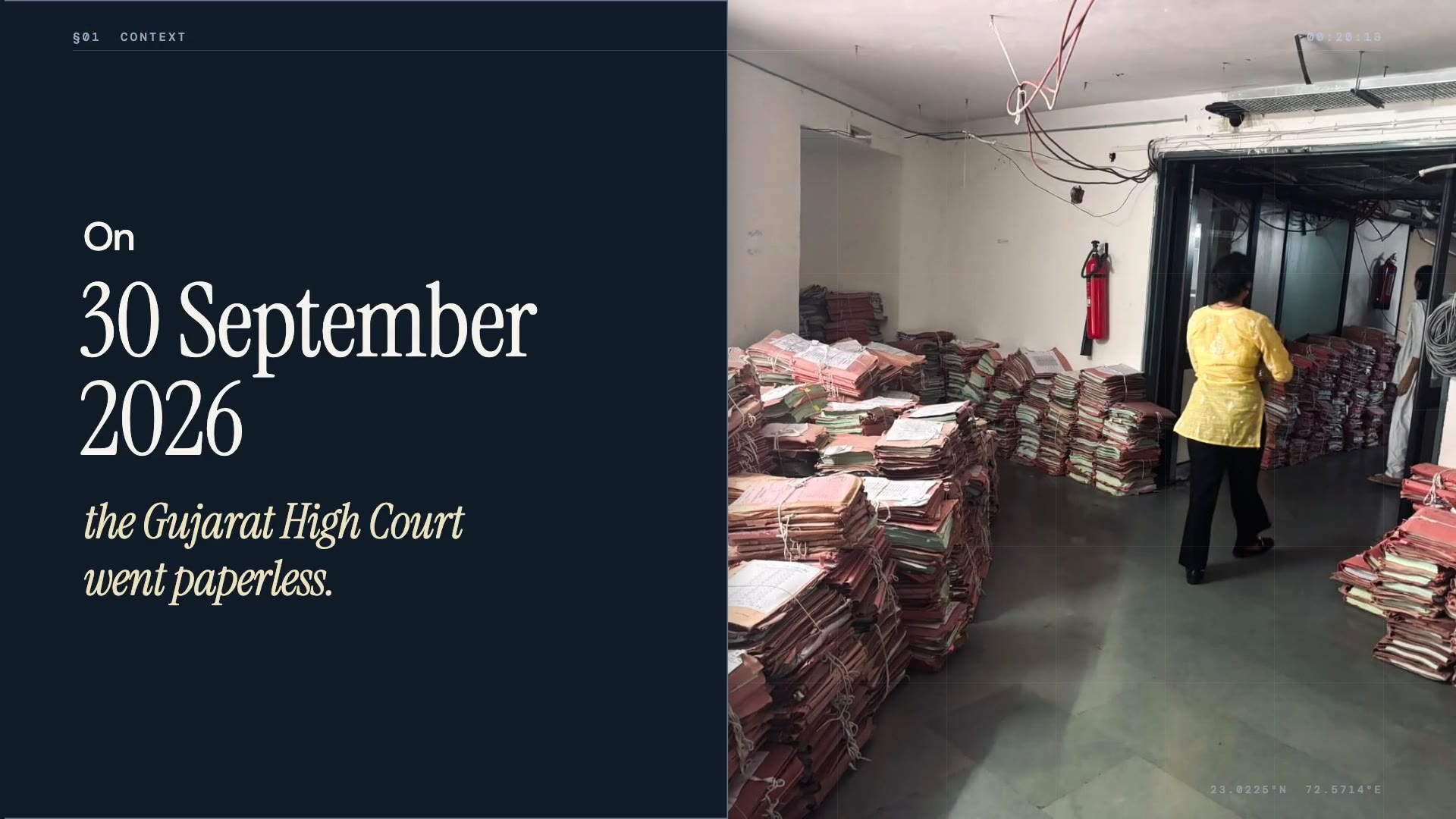

















A payment dispute can involve the servicing ledger, a customer call, an earlier complaint, a collection notice, and outside counsel’s file. The work starts with establishing what happened and finding the records that support it.
A dated chronology, the documents behind each allegation and response, and a list of missing or conflicting records. Every finding links to its source.
Group matters that share a payment-posting issue, a collection notice, or a cancellation flow, and see which operational problem keeps producing them.
Our specialists request missing records, follow up on approvals, and prepare the next work product. Every open item has an owner, a due date, and an escalation route.
Qualified counsel in the relevant US jurisdiction handles advice, filings, and hearings. Your team keeps strategy and settlement authority.
Matters awaiting records, counsel review, or your decision, each with its owner, next action, and deadline. The amount claimed sits beside counsel’s estimate of exposure.
| Matter | Owner | Example blocker | Next action | Due |
|---|---|---|---|---|
| AF-0187 | jhana team | Payment receipt conflicts with ledger | Reconcile receipt and posting timestamps | Nov 18 |
| AF-0142 | jhana team | Customer call recording missing | Request the recording from servicing | Nov 20 |
| AF-0119 | Your team | Settlement authority needed | Route counsel’s recommendation for approval | Nov 22 |
Illustrative portfolio. The records and figures shown are examples, not client results.
An illustrative consumer claim against an auto lender, stage by stage. Settlement or remediation can end it at any point.
01 Customer disputeA payment, credit report, or repossession issue
Teams piece together the complaint, past customer contacts, and account history by hand.
jhana gathers the records, builds a timeline of events, and flags missing evidence.
02 Lawsuit filed and servedThe lender receives the summons and complaint
The complaint passes between teams while they confirm the documents and who owns the case.
jhana logs the complaint and service details, assigns an owner, and tracks deadlines.
03 Triage and responsePreserve records, then file an answer or early motion
Teams review the file and draft a response, often redoing work from similar cases.
jhana prepares the case file and a draft response for counsel to review, following the strategy you approve.
Some contracts send disputes to arbitration instead of court. It can start directly or after a court order.
Counsel reviews the agreement and advises on the right forum.
If it does, the court case is usually paused.
jhana organizes the contract and case records for counsel to review.
An arbitrator reviews the evidence and decides.
jhana prepares the evidence and supports counsel.
Courts can review an award only in limited ways. It is not a normal appeal.
jhana records the result and tracks follow-up under counsel’s direction.
04 DiscoveryThe court sets a schedule; both sides exchange documents and testimony
Legal and business teams hunt for records, answer requests, and fill gaps.
jhana collects and organizes the evidence and tracks every open request for counsel.
05 Motions and mediationAsk the court to decide, or negotiate a settlement
Counsel pulls together arguments and settlement materials from scattered records.
jhana gives counsel organized evidence, draft materials, and comparable cases for motions and settlement talks.
06 Trial and judgmentThe court decides; either side may appeal
Teams prepare for the hearing, share updates, and record the result.
jhana supports trial preparation, records the outcome, and tracks follow-up, including any appeal counsel recommends.
An illustrative sequence for a consumer’s claim against a lender. Stages overlap, and the state, the court, and the case set the calendar; in federal court an answer is usually due 21 days after service. Sources: U.S. Courts, Federal Rules 12, 16, and 26, CFPB, AAA consumer rules, and the Supreme Court on stays.
Start with one claim type and the records behind it. Agree the workflow, the decision rights, and the measures of success before expanding.
A cardholder disputes a charge, contests a chargeback, or defaults on an account. Bring the card agreement, transaction and statement records, network data, and call recordings into one file, with the response deadline on it.
A consumer says the balance was already paid, the account is not theirs, or collection continued after an earlier dispute. Bring the account history, collection communications, prior responses, and credit-reporting records into one file.
The CFPB received approximately 387,400 debt-collection complaints in 2025. [1]
A borrower disputes a payment, a delinquency report, or a repossession. Reconcile the contract, payment and servicing records, notices, calls, and repossession instructions.
The CFPB received approximately 28,500 vehicle-loan or lease complaints in 2025. Repossession was the most common issue. [1]
A resident challenges a deposit deduction or move-out balance. Assemble the lease, inspection records, maintenance history, itemized charges, and correspondence.
A customer says they were charged after cancellation. Compare the cancellation request, account events, invoices, refunds, and previous support responses.
A policyholder disputes a coverage decision or payment. Organize the applicable policy, claim file, correspondence, and decision record for review.
A borrower disputes payment application, an escrow adjustment, or a loss-mitigation response. Reconcile the servicing history, statements, notices, and prior communications.
[1] CFPB 2025 Consumer Response Annual Report — published March 2026, pages 20 and 44–45.
Our agents have been used by over 16,150 lawyers and 650 judges.
The technology behind the work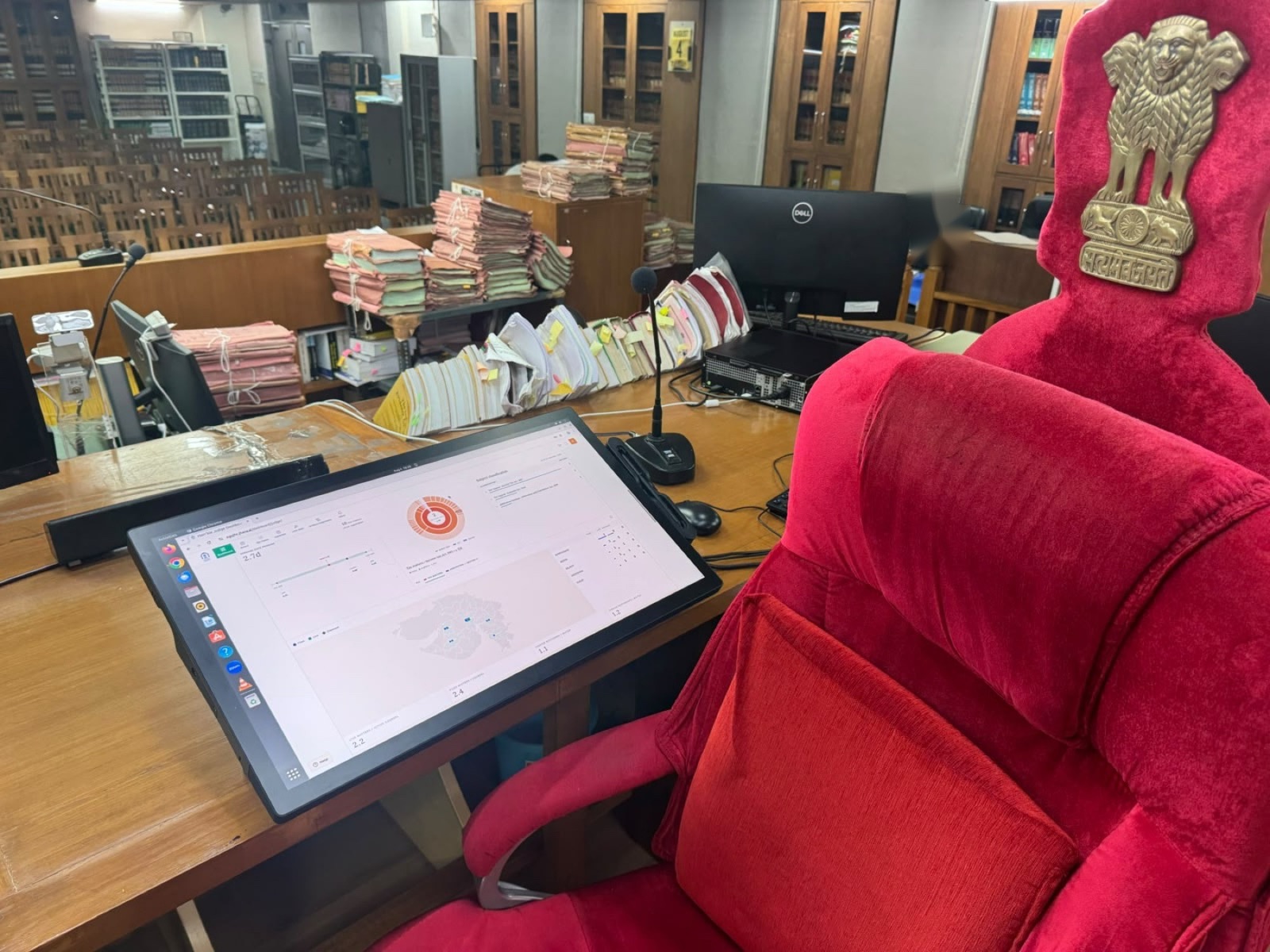
High Court of Karnataka
Registry staff were photographing paperbooks on their own phones and pasting the text into the court’s system, field by field. 500,000+ filings later, for 219,000 litigants, the workflow we measured costs 83% less and first hearings come up to 30× sooner.
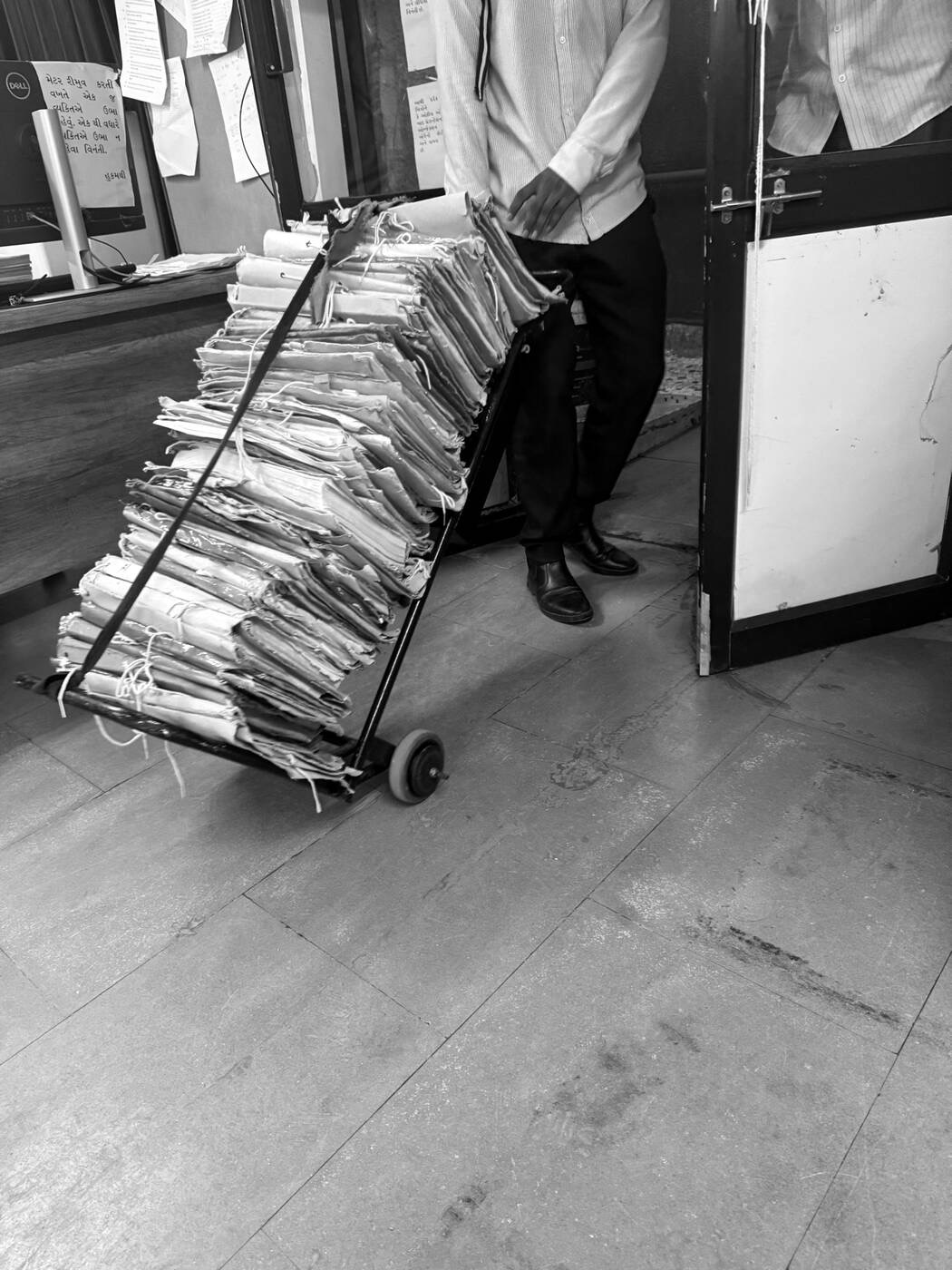
High Court of Gujarat
10 of us spent 100 days on site and interviewed 150+ registry staff before writing any software. The written procedure said a filing passes through 7 desks; in practice, those people share a table. On 30 September 2026 the court went paperless, the second judiciary in India to do so after Sikkim. Both are jhana projects.
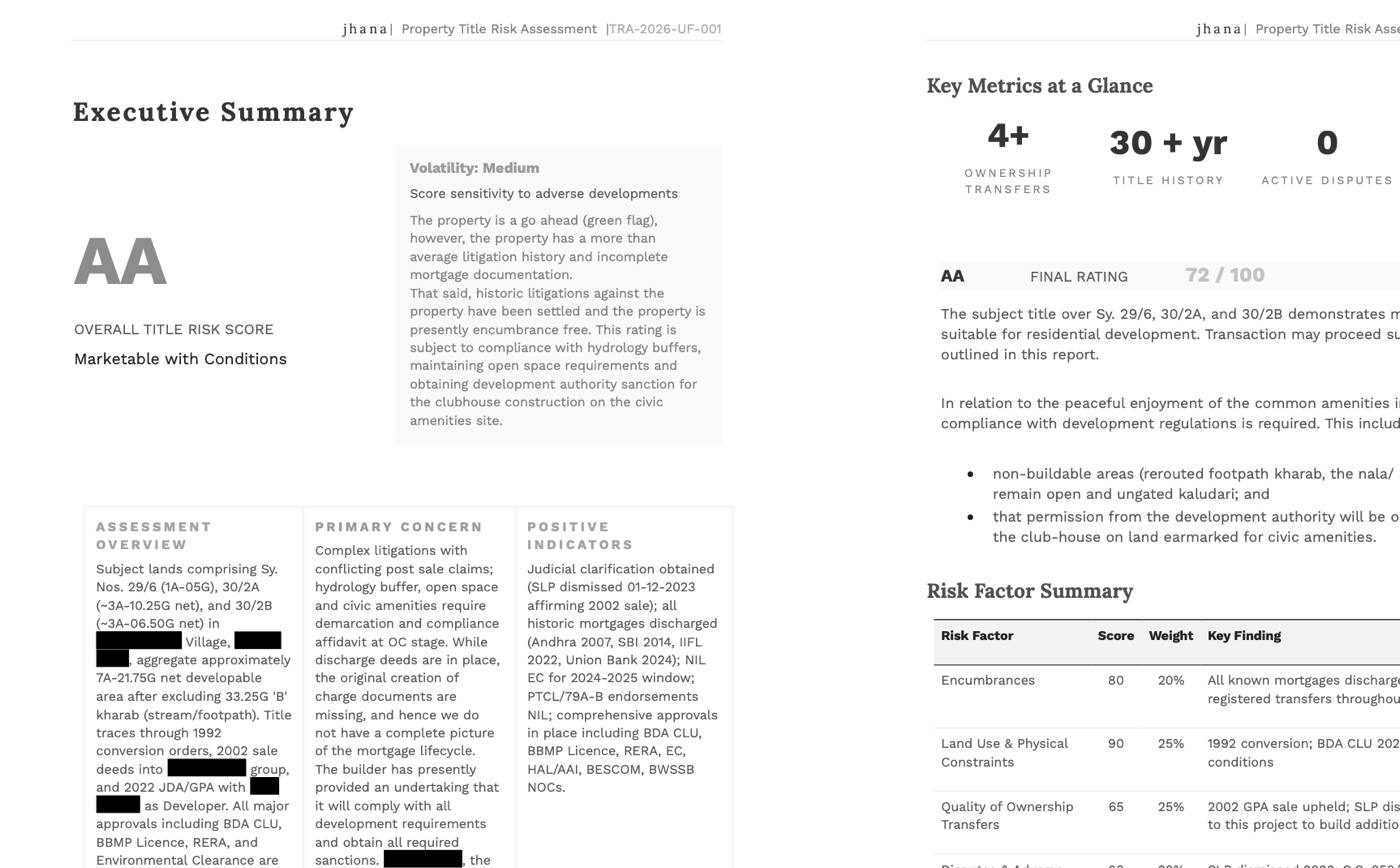
PropSoch Legal
As the exclusive legal partner to a property brokerage, we read everything from phone photos to 40-year-old handwritten deeds. $20M+ in property has moved through the service, and the lawyers spend their time on the anomalies the system flags.
“Every day I know exactly what the lawyer will argue before the case starts because of your AI.”Justice B. M. Shyam Prasad, High Court of Karnataka
We ran an AI-first legal practice, with our lawyers verifying every piece of work. It is where our tools met real clients, real deadlines, and real fees.
An AI-first legal service, run on our own systems with lawyers signing off.
From the first message to the final resolution, with the cost and review behind each piece of work.
Three years of real requests from working lawyers became the opt-in environments our models learn in.
Verification is the prerequisite to automation.
We train a 30B-class model by reinforcement learning with verifiable rewards. The reward is how much of the evidence a task requires that the answer finds and links to its source.
“Adding procedural guardrails and [jhana] to our Claude Code has allowed my juniors to do higher-paying work with less review.”
Mid-sized international audit and tax litigation firm.
Tell us the claim type, the monthly volume, and where the records live. We’ll agree the work jhana takes on and how to measure cost per case, turnaround, and outcomes against the process you run today.