
Beyond Stare Decisis: An AI Preparedness Framework for the Judiciary
First published in the National Law School of India Review online, 25 and 26 April 2025.

First published in the National Law School of India Review online, in two parts: Part I on 25 April 2025 and Part II on 26 April 2025.
Abstract
To stand by and not unsettle the established is a fundamental tradition of common law jurisprudence. However, our heterodox judicial systems are ill-prepared to handle the interventions of rapidly improving technologies, especially artificial intelligence. We lack transhumanist imagination or preparedness. Alarmingly, over 82% of confidential legal data is inadvertently processed by AI, albeit covertly through personal tools used by employees. But abstinence is not a viable strategy: judiciaries must develop an etiquette for AI rather than seek prohibition, so that they may participate in and influence change rather than be swept by it.
The judiciary has much to gain from radical technological advancements. Early adoption should be a major focus. This involves redistributing institutional policies, resources, and technical competence toward technological efforts. From filing systems to case docket briefing tools for judges, there are valuable interventions that can be made across various facets of the litigation process.
But this institutional optimism must be steady and cautious. To frame this transition, we need an ontology of judicial AI that places a spectrum from simple administrative bookkeeping to producing judgments. Courts perform various roles like record keeping, cause listing, managing case journeys, publishing judgments, communicating with the public, training, material production, and maintaining infrastructure. Where or when in the court does the critical application of legal mind, emotional intuition, and sociopolitical context occur? What are the inputs to a judge, and what are the outputs? We must move beyond outdated concerns about bias and instead focus on how we can preserve agency within the judicial process. AI is a double-edged sword of standardisation—it yields clarity, predictability, and speed in the rule of law. But it may also stagnate thought toward Western jurisdiction, erode local nuance, or discourage subversive disruptions.
Preparedness involves being ready for these questions and participating in creating etiquettes and safety mechanisms for new technologies. So, we must be cautious about how we choose AI systems and train human users to develop the necessary skills to verify AI outputs and audit logs. Judicial procurement must urgently adopt a technical know-how for comparing and procuring AI systems. Proactive procurement agendas must focus on technical competence, robust benchmarking, and demonstrable real-world performance over cost-cutting or legacy vendor inertia. First-mover adoption, backed by rigorous human-in-the-loop testing and transparent AI audit logs, will ensure that AI enters the judiciary in a purposeful, observable, and technically fit manner. Courts must define where they must preserve the irreplaceable human elements of judgment—empathy, subversion, contextual interpretation. Everywhere else, they must lead by example and by experiment.
This piece will be published in two parts. Part I lays out the conceptual groundwork—mapping AI’s roles in courts and proposing a three-tiered ontology of Judicial AI. Part II builds on this framework to introduce an updated risk analysis framework and lays out a comprehensive preparedness agenda for enterprise-scale AI adoption in judiciaries.
Part I
I enjoy retelling this somewhat crass anecdote from a Scott Alexander blog:
“A machine learning researcher writes me in response to yesterday’s post, saying:
“I still think GPT-2 is a brute-force statistical pattern matcher which blends up the internet and gives you back a slightly unappetizing slurry of it when asked.”
I resisted the urge to answer “Yeah, well, your mom is a brute-force statistical pattern matcher which blends up the internet and gives you back a slightly unappetizing slurry of it when asked.”
But I think it would have been true.”
Posted on February 19, 2019, in response to the release of GPT-2, this comment appears precocious. His underlying claim is that humans develop general intelligence by observing lots of raw stimuli and data, without being trained via some expert framework or being born with sophisticated knowledge. This metaphor has found great success in deep learning, where increasing the size of the model leads to improved performance. Its been ten years since large-N pattern detectors outclassed chess grandmasters, go champions, and earlier Ais playing as per human opening theories and midgame tactics.1 I found Scott reiterating a similar idea recently in response to a question from Dwarkesh Patel as to why AIs do not find valuable connections in the span of human knowledge that humans have yet to uncover2—
“Humans also aren’t logically omniscient.
My favorite example of this is etymology. Did you know that “vacation” comes from literally vacating the cities? Or that a celebrity is a person who is celebrated? Or that “dream” and “trauma” come from the same root? These are all kind of obvious when you think about them, but I never noticed before reading etymology sites.
I think you don’t make these connections until you have both concepts in attention at the same time, and the combinatorial explosion there means you’ve got to go at the same slow rate as all previous progress.”
Earlier popular imaginations assumed that computer scientists and artists would be the last remaining professions, as the former would program the AIs that replace human jobs, while the latter would retain the unreachable vitality of human experience. When this fantasy imploded, with programming and the arts becoming precisely the first fields to be most convincingly modeled, the myopic backlash is to ask why poetry is automated before household chores. Our early fantasy of slave robots was destined to fail, and I often point to Gödel, Escher, Bach for why this is obvious in retrospect. The book discusses how the same axiomatic logic of self-reference, isomorphism, and organisation underpins Gödel’s mathematics, Escher’s paintings, and Bach’s symphonies. The linear algebra of our models yields an organisation of information from which beauty, knowledge, and meaning emerge. Communities that have internalised this fascination—such as transhumanist and rationalist communities in California since the 1990s—are often where significant forecasts and advancements in AI have emerged. And conversely, lacking this humility and imagination makes us vulnerable to being subjects of change.
Degrowth, safetyist, romantic, and luddite movements are among the few other groups with sufficiently large imaginations about the impact of general intelligence. These communities have called for autocratic pauses in AI development and use. But AI is a technology that disseminates immense amounts of information to diverse audiences in various locations, much like the internet or the printing press. And the challenge with democratic technologies is that they tend to be robust to repression.
We already see robustness to repression: employees smuggle in AI into workplaces that prohibit them and young law graduates are making career choices based on firms’ AI policies. A 2024 study involving 6,000 knowledge workers revealed that 75% covertly used AI at work and 46% would “not give it up” even if it were banned. A large 2023 Salesforce survey found that more than 64% of Indian professionals used unauthorised personal AI of unknown provenance. Meanwhile, in the UK, a LexisNexis survey found that 19% of young lawyers in “big law” are considering leaving their firm because of its “failure to embrace AI.”
This is only the beginning—a recent Anthropic index reports that programmers and computer engineers are more than ten times overrepresented among Claude users vis a vis their count in the worker pool. This will change with generational turnover in the legal field: programmers are early adopters of new technologies, but others eventually get there. The adoption of AI in knowledge workplaces seems inevitable when we inspect the factors driving employee productivity, which managers seek, and satisfaction, which employees themselves seek. It is already fairly well documented that AI makes work easier and improves quality (among others, see this McKinsey note, the early BCG study, and this MIT working paper). But most prescient to me is this early survey of GitHub Copilot users. Copilot is a coding assistant that automatically suggests the next paragraphs of a program, and users press the tab key to accept. 60-75% of surveyed users reported being less frustrated and more satisfied, which is evident as around half of the user-generated lines of code are being generated by AI.
Courts cannot afford to be taken by surprise by emergent general intelligence. For me, this is the beginning of a reckoning of the human role in institutions and society. I think it is not a relegation but a promotion for humans to focus more on areas of subjective interpretation, intuition, and communication. These are areas where we might care about the inventiveness, subversion, and empathy of the human psyche. AI systems will have an impact that is vastly larger than that of the internet, the industrial revolution, or any other discontinuity in technological progress. Current model failure modes like hallucination, long context failures, and snowballing are already proving somewhat “treatable.” So what do we do then: do we simply wait for the inevitable end of history to engulf us? Rather than being pessimistic or alarmist, judiciaries should consider how to prepare for events before they occur, how to influence them to occur in a manner aligned with our values, and what it means to have a transhumanist court. I propose an ontology of law, justice, and AI, updating our risk framework and proposing a set of etiquettes to be prepared for artificial legal intelligence.
A Roadmap
First, we will explore the legal process and its constituents. I will correspond this taxonomy of legal process to AI modalities, establishing why autoregressive language models do so well at legal work and envisioning human-AI collaboration in the legal field. With these cartoon-strip imaginations of medium-term futures, we will attempt to detangle the many things that AI in the judiciary means. A courthouse is many things that are not court halls—they are also the registry and the filing room, and they record inputs and enforce outcomes. AI in the judiciary means AI for all of the functions of the courthouse, including its bookkeeping and procedural functions, and its public access and communication functions. And even when it comes to the application of legal mind inside the court hall, the application of the lawyer, the judge, and the judge’s clerk is different. Counsels submit on behalf of parties, clerks produce a neutral record and impartial scrutiny, and judges rule on submissions. So, by delineating legal functions, we can identify which of them must be reserved for humans—which must be self-determined.
For the legal functions that we agree the court should pursue thinking machines for, it is important to develop a know-how for calibrating risk and regulating etiquette. This risk assessment must go beyond simplistic prediction bias. When predictive machine learning models have attempted to predict outcomes like sentencing, they have been noted to reproduce ascriptive biases like racial bias—see Sendhil Mullainathan and his lab’s work, for example, in Kleinberg et al., finding racial bias in criminal justice models. But Sendhil himself notes that biased algorithms are easier to detect and fix than the biases present in humans.3 Further, it is easy to eliminate predictive systems from subjectively determined areas of the judiciary, like sentencing, just as it is easy to benchmark, test, and reduce explicit bias. We need a risk framework for judicial AI for the post-RLHF LLM era4 (see Smith et al. 2018, this report of real-world deceit by GPT-4, and Greenblat et al. 2024 and Liu et al. 2023 on alignment faking in models). And the judiciary and the state will be able to influence the economic and social regulation of models only if they have stakes to do so—if they devote themselves as institutions to develop, procure, and adopt novel technologies in open court.
Anxious judiciaries should vest their anxiety in encouraging AI usage that is fit-for-purpose, intentional, and observable. OpenAI’s count of weekly active users has already surpassed 400 million. And this is just the beginning. Judiciaries and other government agencies will not be able to influence AI, nor will they have the etiquettes ready for it unless they become early adopters of state-of-the-art technology.
A Thesis Enumerating “Legal Practice”
“Legal practice” is an application of a larger corpus to a smaller corpus, a reading and writing comprehension exercise in stylised notation with axiomatic logic. This makes me very excited as an AI engineer because models that use text as a path to knowledge should naturally align with legal processes. For example, in litigation, one composes the history of common law precedent against the facts and issues of one’s matter. In contract review, one adapts the templates and prior contracts of a company for a new deal. In my view, legal tasks often fall into two categories. Needle-in-a-haystack retrieval tasks involve finding specific information in a large body of text. This could mean finding red flags in a large data room during due diligence or identifying precedents to argue in a hearing. The second category of legal tasks is patterned inference—generating responses or negotiating positions within a familiar and repeated structure. For instance, an in-house counsel at a software product company selling three different products operates within a well-understood search space when negotiating contracts. The same issues—liability, payment terms, or indemnity clauses—arise consistently, and deviations from the template require executive approval for fallbacks.
In my experience, language models are excellent at both of these classes of tasks. The first involves ingesting fifteen million case laws or thousands of prior contracts to produce the right citation. This class of tasks involves semantic search, retrieval, extraction, and information compression—these also happen to be the buzzwords of the day in recent AI developments. Similarly, language models train and develop reasoning abilities by identifying patterns in text and learning to reproduce these patterns in their predictions of new tokens. These might be simple patterns like syntax and grammar, or complex patterns like statutory interpretation and due diligence.
My outside view on legal process is that some processes, like executing a contract, filing compliance documents, or trivialities like witness signatures, are a performance. When words are said in court, language functions as an action and brings about change. In more procedural settings, the legal process is an end and a means by itself—recording is an act of insuring against trust failures that cause disputes over fact. But, in the drawing up and execution of a contract, the commercially valuable activity occurs and concludes before the execution of the contract. It is the terms of the handshake that matter, and the contract is a record. The legal action does not contribute to the value of the economic activity being conducted, and the contract is fulfilled by the conduct of a subsequent economic activity. Yet, in writing the terms of such activity down, the performative achieves something significant. The performance is an end in and of itself, rather than a means to an end.
This split between the actual and the performative yields a native dichotomy for human-AI collaboration in legal practice. Tasks that involve making predictions might be performed by humans (still using AI as research tools), whereas performatives like writing down the handshake could increasingly be augmented by AI systems. Humans can perform legal work as a means to an end, while computer systems can perform tasks such as documenting agreements and filing compliance reports.
An Ontology Of Judicial AI
AI in the judiciary can mean very different things, and their function is a useful way to grapple with their role in the human-AI alliance. I propose a three-task taxonomy: first—judicial AI that is involved in the application of legal mind towards judicial outcomes, our protagonist; second—access technologies for communicating and documenting the law; and third—administrative technologies for registrar and courthouse work.
Technologies Involving The Application Of Legal Mind To Resolve Outcomes
When asked to imagine judicial AI, most people think about AIs that predict litigation outcomes or mediate settlements via ODR. This is the extreme in the spectrum of tools that think and analyse legalese rather than help administer. When we strip this agency away from AI systems but retain their knowledge and processing power, we get paralegal or clerk job aids that help judges quickly parse and navigate their dockets and hearings. While frontier products are emerging in the former category of AI assistants (for example, jhana’s AI Paralegal, see Fig. 1), tools in the other extreme of outcome prediction can be and have been regulated away. One example is France which was early to ban analytics and predictions produced by modeling judges’ behavior in 2019. Similarly, we can imagine regulating away models that predict the ratio in cases.
Imagine further that the model could tabulate various facts for motor accident cases like age, income, insurance status, whether there was drunken driving involved, etc. Now, based on the judge’s sentence, such a model could look up the relevant reference for a formula. For instance, in Sarla Verma, the Supreme Court laid down a framework for computing the compensation to be awarded. This computation could be returned to the judge alongside an audit trail and footnotes. This is an example of AI performing an administrative task—a lookup exercise and an Excel sheet calculation—but the terrain of this performance is in the delivery of justice.
Similarly, there are other ways in which systems that process legal analysis can be helpful whilst preserving human autonomy, where relevant. Imagine a pre-litigation guidance AI that computes analytics like expected process time and cost for pursuing litigation. This addresses the significant issue of court congestion: In 2021, 40 million cases were pending in India, with Bloomberg commenting audaciously that “if the nation’s judges took no breaks for eating or sleeping and closed 100 cases per hour, it would take more than 35 years to catch up”. Delay creates a self-perpetuating strain on the judiciary. Among other numbers, the average pendency for a land dispute stands at 20 years and around Rs. 1.75 lakh crore of infrastructure projects remain paused in litigation. Moreover, court delays cost Rs. 5 of every 100 rupees of income earned in India.
Generally, adversarial justice systems are performant because those who are truly aggrieved are more likely to litigate, and thus court loads are typically for matters of good reason. However, the issue is that those who do not expect victory do not choose not to litigate. This is because Indian courts do not pass orders as to costs, despite being originally based on the English rule. This misplaced idea of leniency has a large potential for manichaeic backfiring. The Law Commission of India, in its 240th Report, demonstrates how courts trivially ignore cost calculations, and even when passing orders for costs, do so at outlandishly low sizes. This is despite a sizeable 31% of the claim value in commercial cases being typically spent on costs. When legal costs, timelines, and expected settlements are opaque and unavailable a priori to parties, there is little incentive to pursue alternate dispute resolution or settlement. So, a softer judicial AI could focus on providing pre-litigation screening, counselling, and triaging—enabling courts to be more confident to pass orders as to costs when litigation does arise after high-information entry points.
If we are aware of what the unique and irreplaceable contributions of humans are in our perspectives, we can keep those realms of subjective evaluation, contextual interpretation, and emotional empathy reserved for the human psyche. Besides, while AI capabilities continue to grow, we do not yet have general intelligence with independence, memory, agency, and wakefulness. Instead, our AIs work ad-hoc upon call and invoke chains of functions with limited parameters and schema. Until new capabilities over long-form thinking and multi-step reasoning arise, current models are better suited as copilots rather than solo pilots anyway. And they are ready for deployment as clerks and paralegals.
Technologies That Record And Communicate
For the second category of tasks, “access,” consider a digital reporter of a High Court. To truly democratise information, we must go beyond merely digitising or archiving public records. Tools like indexing, searchability, and summarisation are some of the things that make public information more realised—more public. So, returning to our analog of an HC digital reporter, a starting point is to ensure that case law is well tabulated (in terms of metadata), made searchable, and kept up to date. While paid proprietary journals offer headnotes and citations, a neutral citation regime offers a freely available index to reference. Current AI systems are already good at tasks like compressing information, interpreting hypotheses, and stylised writing. Consequently, AI products already produce high-quality headnotes and other tags or summaries for the eCourts reporters that High Courts are mandated and working to launch.
AI headnote models have several competitive advantages. Compute is parallelizable—so, bulk historic case law can be analysed simultaneously in minutes to hours. New judgments can be reported at a daily or weekly pace, outperforming the frequency of proprietary reporters. Given the implicit sunk cost of inference from the input tokens of a judgment being processed to produce any given set of N thematic abstractions (“themes” like a subsection of a headnote for a particular statute, a list of questions of law, or a natural language summary of facts), adding the N+1th theme is marginally inexpensive. The logic for this is trivially obvious: if we are producing 40-50 phrases of summary from a document of 100,000 words, adding another 5 phrases to our output is inexpensive as a total token cost. So, jurisdictions can customise their journals, produce them at a higher frequency, and make them searchable and indexed for lawyers and clients to access.
In my experience, practitioners typically forego concerns about AI use for disseminating judicial information when high-quality outputs are shown. It brings up the self-driving car dilemma: computer-driven cars will make mistakes, but at what threshold of outperforming average human performance do we embrace them? I believe that state-of-the-art models will outperform human-written journals at a fraction of potential comparative costs. And access technologies like these are low risk to tolerate given that the AI presence occurs post hoc to the disposal of dispute or administrative action. Public intelligibility and transparency of judicial activity is a substantial intervention in rule of law and is probably a worthwhile cause to give AI a chance.
Technologies That Administrate Outside The Court Hall
The third category belongs to “administrative” technologies—one way to imagine this is AI interventions in activities that happen outside the courtroom. For instance, in the roster or in the registry. Administrative AI focuses primarily on improving judicial efficiency through workflow automation, docket management, resource allocation, and logistical planning. Imagine an AI model allowed to read, categorise, and tag the typesets from pending matters. Now, this model could bunch case law by issue and produce a listing such that, say, all motor accident cases of a certain kind could be heard on a certain day and so on. This would allow judges to hear and dispose of similar matters in bulk. There is already a demand for this feature, with human editors annotating case categories for both regular listing and group disposal efforts.
Another example includes technologies that automate clerical tasks like document filing, format validation, paperwork management, stamp duty calculation, copy maintenance, and managing court calendars. By integrating administrative AI, courts can streamline filings and other document-related operations, reduce human error, and reallocate human resources to higher-order judicial tasks. This would save hundreds and thousands of human hours in courts. These administrative AI uses are typically non-controversial due to their non-judicial nature and clear, measurable efficiency gains. They free judicial personnel from rote tasks, enabling judges and court officers to focus more profoundly on delivering justice rather than administrative overhead.
Meanwhile, we now have a taxonomy of AI in the judiciary. We have also built imaginations and case studies for what it might look like in action. We can proceed to think about the legal process as a performative, why AI is a native solution for its conduct, and how to safely bridge this transition.
Part II
Part I laid the conceptual foundation for judicial AI, first by breaking legal work into retrieval versus inference tasks, and then by introducing a clear three-tier ontology. Through illustrative examples, I demonstrated where AI can enhance efficiency and where human judgment remains indispensable for empathy, context, and normative discretion. Such a framework moves the conversation beyond vague notions of ‘AI in courts’ to concrete categories that clarify both opportunity and constraint. With these insights, this part explores the associated risks AI poses and outlines a strategic, step-by-step agenda for responsible adoption of AI in the judiciary.
An Updated Risk Framework—Moving Beyond “Bias”
Anecdotally and from conversations with hundreds of lawyers, my experience is that the legal studies risk framework for AI technologies lags behind by at least one generation. I have listened to presentations about anonymisation and privacy to remove PII from sensitive data, oblivious to developments in differential privacy and events like the Netflix reconstruction attack. A similar mishap occurs when we limit our maximal imagination of AI risk to bias, particularly regarding machine learning models that process (often high-dimensional) numeric or coded data to predict trends and outcomes. These kinds of models are the easiest to understand and detect bias in. Our autoregressive LLMs whose personalities are artificially reinforced are a substantially different beast. LLM-era models are highly capable but are also heavily incentivised into servility and likability. By making humans rank options in terms of preference in taste, ethics, and personality, we slowly moderate raw models into their saleable personalities.
Various labs and academics have written about alignment and safety. However, as residents of a postcolonial state and emerging market like India, there are other short- to medium-term issues that should preoccupy an updated risk framework. My fundamental worry is that if AI agents become affordable and reliable enough to handle much white-collar work, we may face a worrying “looping” phenomenon. Economically, this could mean that returns to labour are swallowed by returns to capital. That both consumer and service provider are now the wealthy; politically, culturally, and linguistically, it could result in AI standardising new knowledge. In a globalised world, India’s economic and cultural growth has vastly benefitted from being the seller to an American or international buyer. But what if the buyer and seller now converge, and various kinds of capital loop within?
Economically, India’s model of upward mobility has substantially relied on services and, particularly, the export of services. A common upward mobility story in India might be growing up in a village, paying to attend a private university, and moving to a city with a low-paying corporate job, perhaps working in BPO or software services. But this move still represents a substantial shift into the middle class, and those who persisted in the system for long enough, did well. If AI outperforms a lot of offshore low-skill white-collar labour, what happens to this upward mobility story? Today, Indian IT is roughly 8% of India’s GDP but also over 52% of the global IT offshoring market, and Goldman Sachs thinks that India has the fastest-growing service exports in the world. Unfortunately, the reigning paradigm in AI is one of scale. We have found recurring success in improving model quality by increasing things correlated with model size, such as the amount of training data, the number of trainable units (parameters) in the model, or the chain of thought test-time compute spent by the model. This is unfortunate because scaling is extremely expensive, leading to a shift where returns are increasingly directed towards capital rather than labour or skill. Both the customer and the model provider reside in California. This is the existential risk in economics from “looping.”
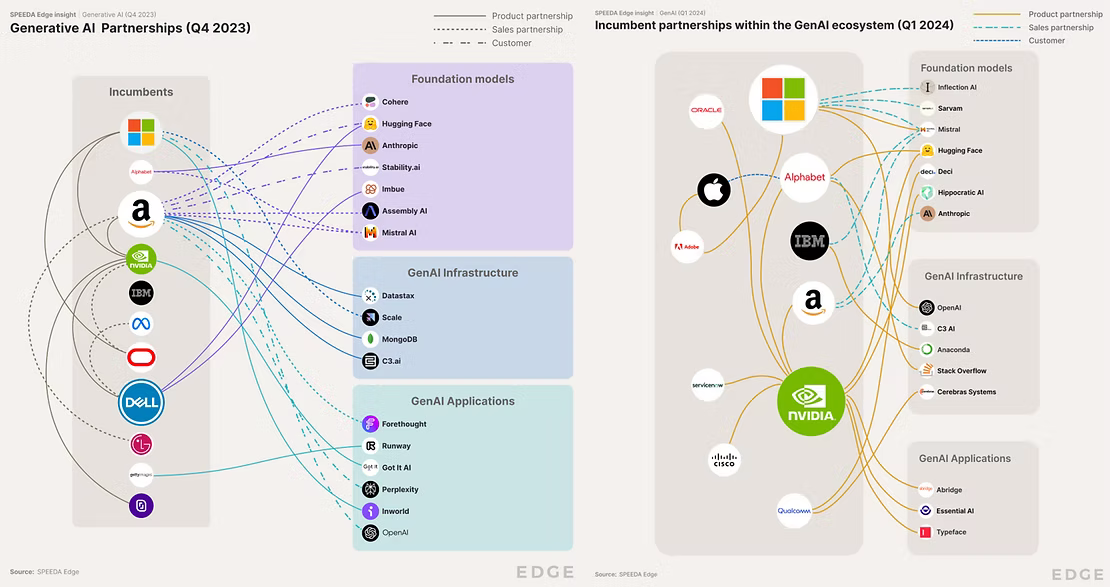
Culturally, the widespread adoption of AI in judicial settings risks producing a uniform legal discourse, potentially flattening a pluralistic Indian jurisprudence into a monolithic and homogenised narrative. An AI system, particularly one trained predominantly on Western jurisprudence or globalised English corpora, risks eroding diversity of thought. Over time, judges and lawyers who rely on these standardised AI-generated opinions and drafts might unconsciously align their reasoning and expression with these outputs, gradually narrowing judicial creativity and interpretative variety. These are the ten- and fifteen-year horizon issues that judiciaries must prepare for today.
Politically, this looping effect extends the subtle influence of private, often foreign, AI companies over domestic public institutions, including the judiciary. When judicial writing styles, terminologies, and even reasoning begin to converge toward AI-generated standards, it inadvertently grants significant cultural power to the designers of these AI models—often private, overseas entities. This indirect influence can be profound, shifting the locus of interpretive authority and subtly reshaping legal norms without explicit public or democratic oversight. The critical insight for action here is to ensure the provenance of the data and personality powering AI pipelines, ensuring that they have the appropriate local context and proactively digitising records to build deeper databases for future systems.
So, as in the creation of any lingua franca or nomenclature, standardisation is a double-edged sword. On one hand, it can democratise access to legal information, codify it to be increasingly machine-readable and usable, and make legal outcomes predictable. It might mean substantially faster justice and a more predictable rule of law. On the other hand, this dynamic tension—between standardisation’s benefits in clarity and interoperability, and its risks in homogenising complex socio-cultural landscapes—makes proactive influence of the judiciary in legal AI efforts essential.
In the case of predictive bias, we noted that old-school algorithms that read lots of numbers about a defendant (or a healthcare recipient) to predict the sentence (or cardiovascular risk) often end up learning models that replicate racial biases or other ascriptive discriminants (see note 5, and Sendhil Mullainathan’s work above). But humans are the sources of these biases and currently display them too, except that it is easier to observe and correct when the algorithm is racist because this can be tested and measured at scale on historic data. This is especially so because predicting a number, category, or True/False is easy to count and scrutinise. These models also have fairly interpretable architectures. Hence, it is possible to benchmark and improve bias rates.
The LLM-era inscrutable analog for bias is the beast of linguistic standardisation. To avoid omission-commission bias, we must again compare the rate at which a problem occurs in computer system against existing human rates. The current system of coded English laws with a top-down systematic enforcement also produces standardisation that is sometimes erosive of local nuances and pushes towards codification and predictability at the cost of diversity. Whereas in the case of predictive bias, humans were difficult to observe and correct, simple AIs could be benchmarked and revised Language models are relative blackboxes; they are not easy to understand or scrutinise. GPTs train by predicting masked tokens and learning which parts of the prior sequence of text they should pay attention to; and in learning to finish complex sentences, they end up learning vast quantities of human knowledge. A GPT’s process encodes texts into high-dimensional numeric spaces, where sequences of neuron activations trace logic patterns that produce maths in that projected space. Much like watching brain activity under MRI, we can only watch prompts take pathways through the model’s layers to find the best completions to prompts. It is not easy to prove what their latent worldviews are, or to deterministically control model ideas and values. Our current approach has been to produce masks of aligned personality via reinforcement learning from human feedback where we punish and reward the model post-training to reinforce good virtue. We attempt to elicit neutrality from these models by masking them past knowledge to truthfulness and alignment.
AI systems will participate in creating the next generation of written language and language imprints memory and ethics. The appropriate field of research to be obsessed with today then is not debiasing, it is alignment research. Mechanistic interpretability1 wrangles with the subcutaneous influence that our white-collar AI servants will have on us. What produces the personality, opinions, and beliefs of AI systems—who is shoggoth under the mask?

With this updated risk framework, we can ask appropriate questions that help build a preparedness framework for AI in the judiciary. What are the texts and data that the AI systems we use are based in? Does the AI system work on solicitation, or does it work proactively? Does it report speech and summarise neutrally or does it opine? Does the AI diversify its language and writing based on the interaction with the user controlling it? Are there audit trails for AI-generated content that judges read and utilise? These kinds of questions help set a data, procurement, and technical infrastructure agenda for courts to become early influencers in AI etiquette.
The Preparedness Agenda
It seems fair to generalise that humans have historically been able at adopting new technologies. We learn emergent etiquette and language, understand symbols and interfaces, and we make these technologies our own. We repossess them and find our own systems for these technologies. Presumably, this will happen with AI as well.2
My argument is that any preparedness framework must be incentive compatible as a prerequisite to be effective. I.e., the institution interested in influencing change and thought leadership must have its own resources dedicated to projects in the space such that it is materially invested in its theories of change. The stakes must be real. This means dedicating administrative efforts towards technical preparation—if we want future systems to be built on rich local data, we need to make various records machine readable proactively. This means expanding efforts to capture and digitise court activity, change-manage e-filing systems, and making judicial data accessible. Legacy data systems like the current NIC architecture are built from the perspective of rigid security rather than fast-moving innovation while preserving integrity. Language models are a combination of the tokens supplied to them—building richer corpora of local legal data means influencing them further towards value alignment. Further, incentive compatibility means dedicating financial resources towards procuring, engaging, and deploying AI products and services at various touch points in the judicial system. If the judiciary wishes for AI products used by lawyers, judges, and registrars to be of good provenance, technically superior, and ethical—they must spend to encourage startup activity in the space. Incentive compatibility also means constructing administrative changes like dedicating AI agendas to high court computer committees and hiring specific decision makers for AI procurement and maintenance in IT and Computers Registries.
Government (as a behemoth) is already the biggest single spender in legal services in India. And it still under-spends. Combined central and state government spending on legal services—including court infrastructure, judges’ salaries, legal aid, and counsel fees—totals roughly ₹25,000–26,000 crore annually (under 0.1% of GDP, with states spending around 0.6% of SGDP), whereas large corporate legal expenditure alone reached ₹63,807 crore in FY 2022–23 and the total size of the Indian legal services market is estimated at around ₹1.2–1.5 lakh crore annually. So roughly, the union and states together finance around one-fifth to one-sixth of legal expenses in the country, perhaps less, giving the state a command over a plurality of legal incomes. This is still low though. Legal aid spend remains critically under‑resourced at just ₹6–7 per capita per year. The AI efficiencies we have been reporting so far can produce substantially larger outcomes at current spend levels and become a powerful public finance intervention.
By early adopting AI systems, the judiciary will both resurrect life in its technical bureaucracy via public-private competition and drive primary private sector innovation via demand. Edler et al. report that government procurement has caused innovation renaissances in European policy tech. Government led efforts like Germany’s with IBM Olga have already found demonstrable success. Innovation also means that the government plays a role as a pooler of risk: with clear mission statements, budget earmarking, and capacity‑building within procurement teams, governments can manage high‑risk, high‑reward contracts. With the right incentives and by allowing bureaucrats forgiveness to experiment and pilot new technologies, mission-oriented procurers can become thought leaders. The Harvard Kennedy School guidebook for result-oriented RFPs reiterates the importance of dedicated administrative talent with flexibility and autonomy to make procurement decisions. Simultaneously governments must invest in change management with various stakeholders across the bar and bench, from registrars to justice seekers, to build behaviors and train technical soft skills needed to use AI effectively and safely (see the McKinsey “revolutionising procurement” report).
So, an effective preparedness framework which produces thought leadership in AI innovation is predicated on participation and early adoption. If institutional procurement is healthy and alive, we can be less worried about risks of relying on third party applications and services for judicial process. Proactive technical teams will be highly capable at ensuring appropriate security and data integrity terms in RFPs and procurement contracts. Ultimately, we cannot afford to be absent when AI becomes the norm and be upset later about the quality of the emergent etiquette. Waiting for technology to become a norm leaves governance lagging behind corporate culture in technical efficiency, except that inefficient governance is a citizen grievance. This is why the OECD has already adopted a framework for government led innovation in AI, the White House has called for judiciaries to adopt AI, and why government efforts to regulate AI are unlikely to succeed without a participatory top-down AI agenda (Zick et al. (2024) highlight more examples of such current efforts like Canada’s CDADM framework and the WEF’s AI Procurement in a Box).
Zick et al. point out that preparedness frameworks on paper often face external validity problems, so it is better to pick good priors and initiate government pilots and procurement. The real world serves as the best laboratory for testing new ideas. Better etiquette will emerge from user culture and users will make a new technology their own. Worries of overreliance on a technology due to the efficiency gains it seems to produce cannot be regulated with firewalls and bans. The internet is ubiquitous, and confidential or sensitive information can easily find its way into personal computers and shadow AI accounts. Preparing others for change also means preparing ourselves for a fresh worldview that is not grounded in luddite nostalgia.
When we prohibit AI systems, we merely make employees their own procurement decision makers. Individual employees will not stop using AI tools, and they will use whatever tools they are advertised to use. I.e., if judiciaries do not procure apt AI systems, their staff will still use AI, but we cannot rely on each individual member to use reliable AI systems of good provenance. On average, it is difficult to know as a layperson whether my queries are being used to train AI models, what privacy settings I agree to, and which tools are fit for the tasks and data that I require. As AI advances rapidly, it should not be the responsibility of individuals to track which AI systems are today’s state-of-the-art. And today or tomorrow, individual judges, judicial officers, registrars, clerks, and interns will use some kind of AI. When procurement is conducted top-down instead, not only do managers get control over the custody and ownership of their data, but they also benefit from their juniors’ AI usage becoming transparent and observable. Most of all, incentives and exposure align such that they can procure AI that is good for stylised tasks, has the appropriate interfaces, and is technically state-of-the-art.
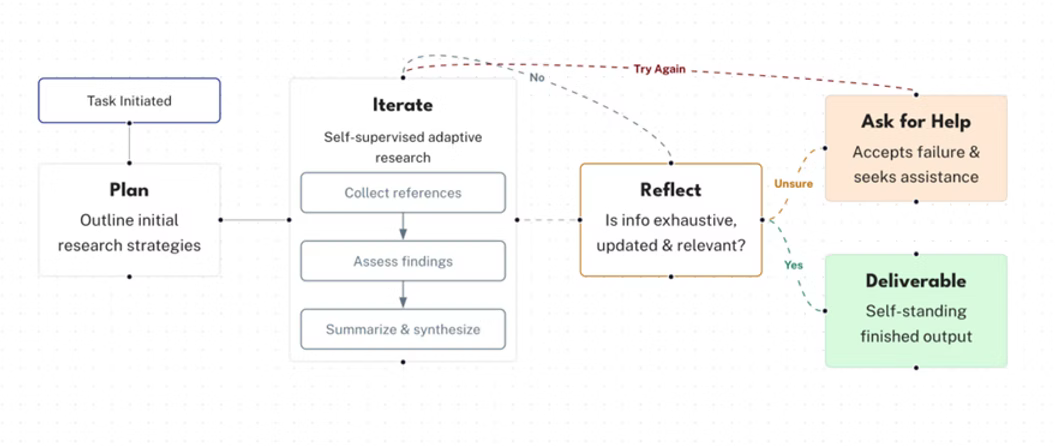
Adept AI procurement requires thinking about which tasks or settings require stylised vertical AI tools and which are performed by general tools. My definition of vertical AI is tools that go past frontier models to provide rich dashboards or interfaces, are powered by up-to-date data coverage (eg., indexing case law and statute), and can independently perform agentic end-to-end legal tasks. Then the first requirement from a potential vertical AI vendor is rich, interactive interfaces fit for the task. For instance, a drafting AI must edit my word document. A document review AI must make comments on my PDF. A litigation tracking system must give me interactive cause lists and docket dashboards. This is true of all vertical AI—a financial agent should output DCFs and charts, a shopping agent should output Amazon orders, and so on. Any workflow that has stylised legal tasks will benefit from an AI that has AI collaborating with humans in appropriate interfaces, mapping various digital worksites to be AI interoperable. Whereas internal administrative flows that have diverse tasks that are not very stylised might benefit instead from broadly capable generalist AIs.
Enterprise AI procurement as a strategy will also become increasingly forgiving on the purse, besides already producing public finance efficiencies. According to Sam Altman, compute costs follow a convex Moore’s Law. If the number of transistors in a chip roughly doubles every two years, AI costs roughly fall about 10x every year. While it will eventually become easier for individuals to access their own hyper-personal assistants, in the early days the state must exploit its pooled bargaining power and acquire technology on behalf of its beneficiaries. When judiciaries assume the cost of compute for access technologies, like AI-generated headnotes or translations in their digital reporters, they are relieving young lawyers, small practitioners, and average citizens from bearing the cost of compute. Thus, enterprise judicial AI adoption becomes a market-making tool that democratises entry costs for new lawyers or firms and makes the legal services industry more competitive.
So, early adoption means judicial officers and staff use better tools provided by managers, while also exposing their AI usage to managerial scrutiny. It means that the government drives innovation and thought leadership, so as to influence etiquettes. A combination of administrative, technical, and behavioral changes will produce a more efficient judiciary while aligning AI innovation. If we agree so far that we should early-adopt enterprise AI, the immediate etiquette to learn becomes procurement etiquette for AI-era technologies. In all the procurement literature cited thus far, the seeded trivial assumption is that we already know from experience that cost-based assessments do not work very well. This is true for AI as it is for building roads and bridges—tenders must balance quality metrics with cost bargains. Especially in AI, where scale is proportional to quality, increase in cost often tautologically means richer outputs. Being an early adopter requires boldness in pursuing high-risk, high-reward procurement as new hardware drives costs down. It means treating technological interventions, especially knowledge technologies like AI, as investments. This does not mean that we must become over reliant on overseas model providers that dictate costs. Developments like Deepseek highlight the effort to find efficiency frontiers that reduce costs for existing scale-based model architectures. India has not yet, but will hopefully soon, emerge as a player in the race for frontier models. Until it does, we must at least invest in vertical AI and application layer systems that are built for Indian systems.
Procurement failures can also arise from more insidious assessment criteria. For example, tenders often slap a minimum number of years or revenue requirements that providers must satisfy. This keeps software providers of the state isolated in a shortlist of legacy services companies. Whereas spiritually, the AI world most canonically represents the complete cultural triumph of the West Coast. The AI world is abnormally driven by hyperscaled startup labs, and more broadly, by industry. Many of its seeds come from nontraditional subcultures. Chris Olah, one of my favourite AI researchers, does not have an undergraduate degree. Top-class PhDs line up at startups and undergrads leave college to join frontier research labs. So, high-risk, high-reward procurement means finding ways to breed stability while working with nascent technologies but also nascent providers.
Obviously, stability is important. Working with a startup represents an existential risk for any government program. This means that procurement decision-makers need to find creative ways to inject stability into their partners. This could come from owning the compute, licensing models, and having dead man’s trigger clauses that leave ownership over data and systems with the procurer if the partner experiences insolvency or liquidation.
Given such relaxed minimum guarantees, procurement agendas should instead focus on benchmarks and performance. Even for debiasing models and making them safer or better aligned, high-quality benchmarks are essential tests. For instance, paralegal AI models must have to take MCQ tests and produce swathes of writing and reading comprehension exercises that are judged by human or algorithmic judges. Unfortunately, our nascent legal tech ecosystem does not yet have good benchmarks or evidence-based studies to evaluate legal AI providers. In the absence of high-quality numeric indicators, it is important for procurement decision-makers to not fall prey to unsubstantiated claims or returns. If a tool does not cite a publicly available study but makes claims about changes in turn-around-times (TATs) or return on investment (RoI), this should account as a red flag. The important thing to remember is that AI system benchmarks must be used to compare providers against each other, but also to compare best-in-class AI systems against corresponding human performance. Benchmarking or studying human performance and pain points will allow courts to identify where there is lots of value to unlock from technology.
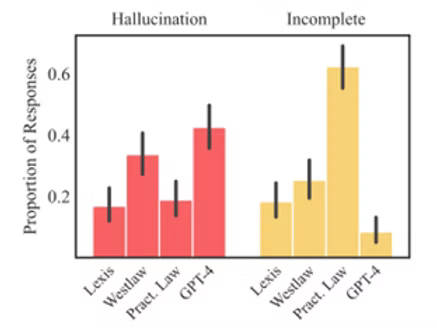
In the absence of high-quality benchmarks, it is important to find appropriate proxies. While market presence is a decent proxy, in my experience, this is easily hijacked by marketing capital or players with existing networks. AI is an early, emergent, and powerful technology. It is also built upon blackboxes: in predicting the next tokens (subwords) of a sequence (sentence) across vast training runs scanning through the entire written internet, models somehow develop knowledge and reasoning. Somehow, without understanding neurocognition very well, we have still built a simple simulacrum of the human mind. We are still learning what the failure modes in current models are and how to avoid them: be they issues of snowballing context or missing training data that causes hallucinations or be they issues of personality, agreeability, and censorship. Excellent AI systems are typically built by scientific teams collaborating with jurists to wrangle with large quantities of legal data—AI as a nascent technology cannot yet be reliably built by purely legal (ie., non-technical) teams nor legacy IT companies.
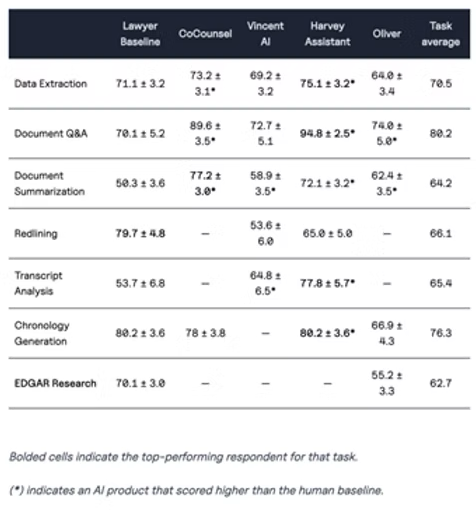
More appropriate proxies might be the development team of a model, its technical specification, and whether it has been substantially beta-tested. Nonetheless, procurement decisions must go through both their own qualitative testing with human expert audiences as well as through pilots that trial and improve AI systems in real-world conditions. To gauge real-world viability, decision-makers must ask pointed questions: Who built the model? What are their qualifications and track record? Is the model retrieving comprehensive and updated data for the legal domain, and has it been subject to transparent beta testing or peer review?
At the same time, AI procurement should never hinge on a single demonstration or marketing pitch. Substantial user pilots are necessary to test how the tool interacts with actual judicial workflows. High courts should share pilot results with each other, and interventions that have succeeded in some jurisdictions should be replicated in others. A generative AI system might perform impressively in a canned demo but could struggle when faced with domain-specific intricacies or large volumes of unstructured documents. Human-in-the-loop testing—where judges, clerks, and legal officers simulate real tasks and provide feedback—is essential to ensure the tool not only functions well in theory but also integrates smoothly into day-to-day judicial operations. If the model’s performance degrades over time or fails to align with institutional ethical standards, procurement contracts should allow for re-evaluation or termination without undue burdens. We need to change our procurement lens and methods to be one that enables flexibility and change.
Conclusion
Judiciaries, but also other social contracts of the nation state, must be rethought for the AI era. We must decide what tasks must be reserved for human self-determination, and where we must enshrine our human right to make mistakes and ability to intuit situations. Our motivation for what makes the human psyche unique could be whatever it is, be it a non-materialist interpretation of consciousness or a belief in the unique, subversive, and empathetic nature of emotional and somatic experience. But as long as we can agree on what tasks we do not want to outsource to thinking machines, we can stay clear of major controversy. Such tasks might be those involving a contextual understanding of socioeconomic circumstances and an application of emotional connection like in the case of awarding sentences or compensation. But there is a broader ontology of judicial tasks and AI is really fit for purpose for so much other legal process. So, if the judiciary decides to embrace data interventions, embrace AI through enterprise procurement, and makes wise decisions to pick technically apt solutions … we might just get lucky.
*Hemanth Bharatha Chakravarthy is the Co-Founder & CEO of jhana.ai, which produces datasets, agents & interfaces that make legal research, drafting & doc review faster. They trained in applied mathematics and economics at Harvard College and have a background in quantitative research, policy, and government.
Part I
- 1. See the IBM Deep Blue victory over Kasparov in May 1997 and the Deepmind AlphaGo victory over Lee Sedol in October 2015.
- 2. And see Dwarkesh’s response here.
- 3. “By contrast, uncovering algorithmic discrimination was far more straightforward. This was a statistical exercise—the equivalent of asking the algorithm “what would you do with this patient?” hundreds of thousands of times, and mapping out the racial differences…Humans are inscrutable in a way that algorithms are not…”
- 4. Reinforcement Learning from Human Feedback, see Lambert et al. (HuggingFace blog, 2022).
Part II
- 1. See for example, the Transformer Circuits Pub exploring what makes transformers the intelligences they are by Anthropic: https://transformer-circuits.pub
- 2. For example, take the case of political deepfakes. These have been used adversarially, for example, by Erdogan during elections to link opponents to insurgent outfits. These have also been used by mainstream politicians to campaign in absentia, for example, Imran Khan campaigning for the PTI whilst imprisoned via deepfakes. However, in due time, humans will develop a taste for AI-generated content. In not too long, children might look at advertisement banners and call them slop. We will know to look for fingers and limbs and lighting and absurd background elements to detect AI art. Newer models will grow more realistic and accurate, and we too will evolve our sense and taste for human authorship.