
| Month | Case dossiers opened | Case files taken in | Pages processed |
|---|---|---|---|
| February (from the 12th) | 1,738 | 8,577 | 163,394 |
| March | 1,859 | 51,352 | 472,226 |
| April | 3,126 | 79,873 | 620,083 |
| May | 294 | 10,086 | 218,507 |
| June | 4,356 | 118,644 | 895,459 |
| July | 5,398 | 151,263 | 1,148,680 |
| August | 4,198 | 98,830 | 751,088 |
| September (to the 28th) | 2,110 | 51,974 | 484,369 |
| Total | 23,079 | 570,599 | 4,753,806 |
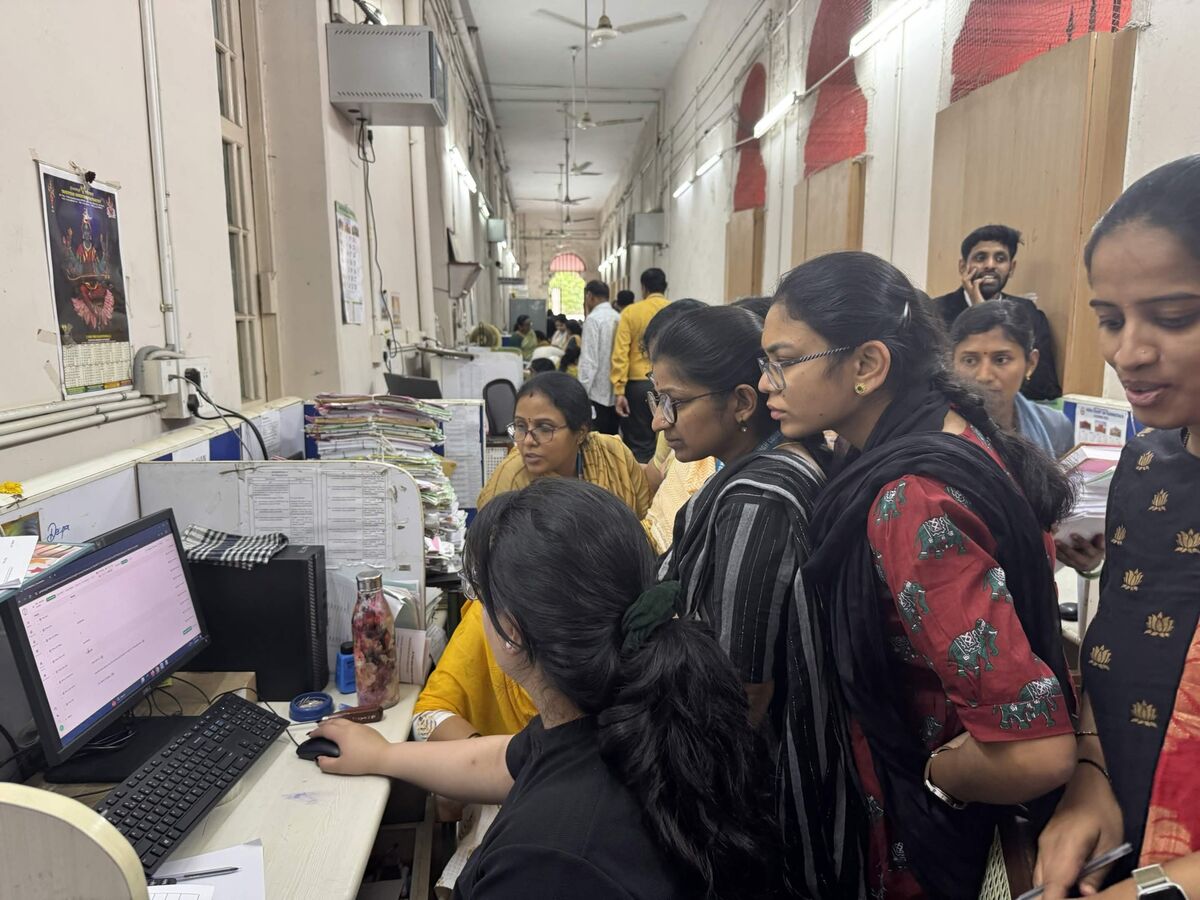
The usual explanation for India’s court delays is too few judges. Spend a morning at a registry counter and another presents itself. Before a judge reads a word, every petition is read by someone else: checked for defects, entered into the court’s case system, numbered, and listed. Each miss sends the litigant home to come back another day. DAKSH has priced those days: ₹759 spent and ₹1,288 in wages lost, in 2024 values, for each one a civil litigant gives to a hearing, and productivity losses from court attendance worth 0.48% of India’s GDP.
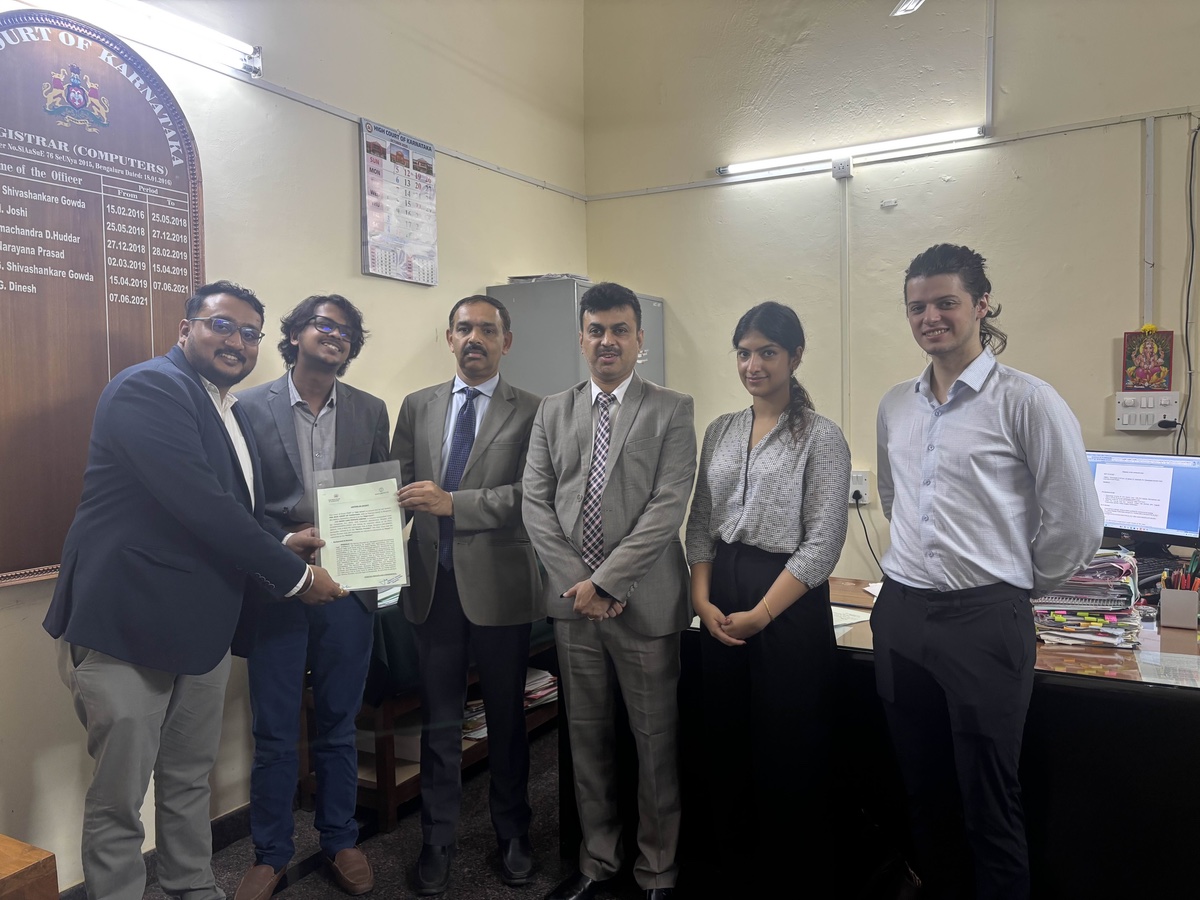
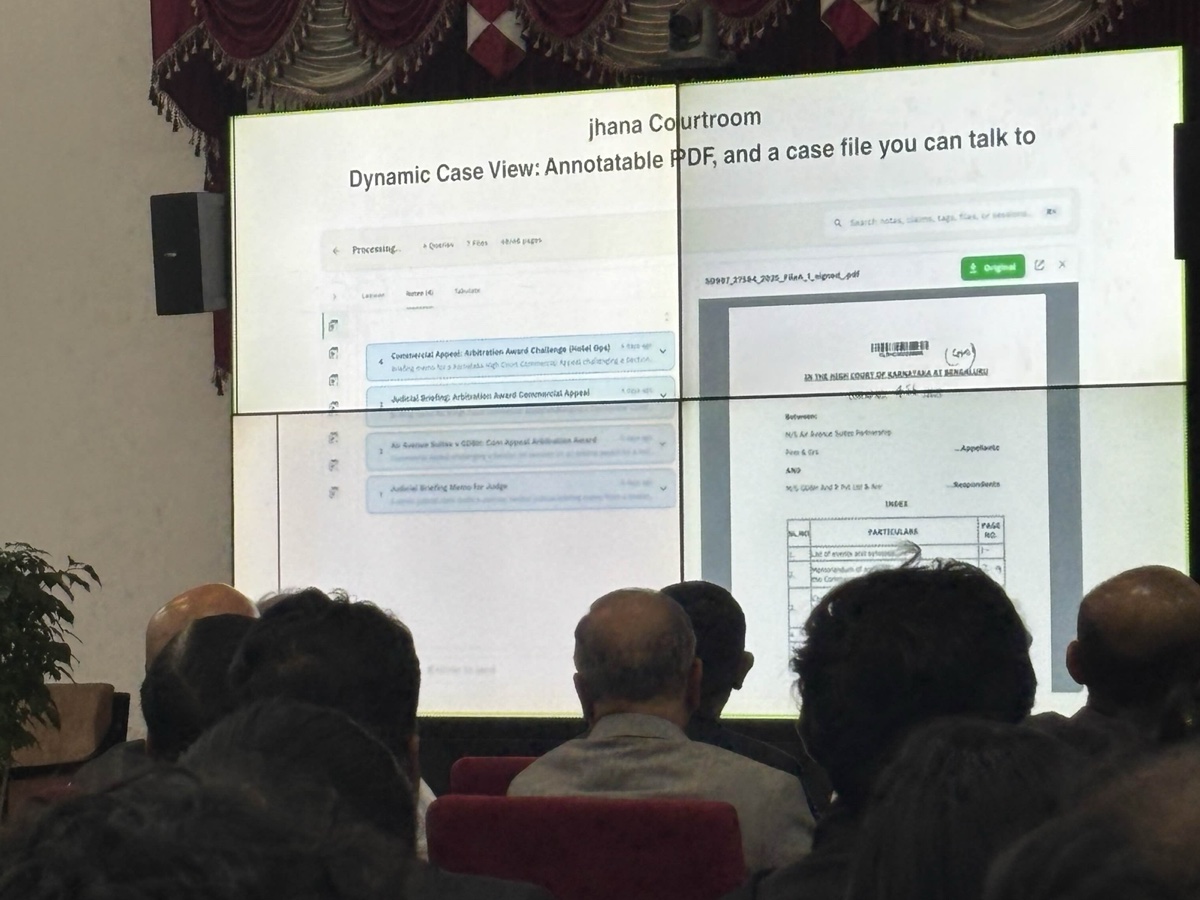
The bench has the same problem at a larger scale. A judge may have 70 matters on a day’s list, each of 200 to 500 pages; at two hours a file, that is 140 hours of reading in an eight-hour day. The problem is not diligence. It is scale. Since October 2025 jhana has run filings and judge aids end to end for the High Court of Karnataka, at all three of its benches: Bengaluru, Dharwad, and Kalaburagi. Agents read each bundle as it arrives, fill the court’s records, raise defects for the scrutiny officer, and brief the judge, with every finding tied to the page it came from. “Information is captured once, checked as the case moves through the institution, and reused rather than repeatedly re-entered,” the Observer Research Foundation wrote of the design.
When that study went to press it counted 266,000 case files. By 28 September 2026 the count was 570,599, with 4.75 million pages, for 219,000 litigants, and first hearings up to 30× faster. The registry’s work changed with it: rote data entry became verification. It is the design jhana’s Anya Batra argued for in Bar & Bench: AI that “pre-screens filings for completeness and jurisdiction before they consume registry load or hearing slots.” Every consequential decision still carries an officer’s name.
“jhana’s AI briefings for judges are exceptional.”
Hon’ble Mr. Justice B. M. Shyam Prasad, High Court of Karnataka
“Initially launched in just 11 courtrooms, jhana now serves three High Court benches in Karnataka, across Bengaluru, Dharwad, and Kalaburagi. It has processed over 266,000 case files, reduced manual registry work by 83 percent in the measured workflow, and shown promise in accelerating case numbering and first hearing by up to 30 times.”
Observer Research Foundation and Reliance Foundation, When Silicon Meets the Soil: India’s AI Revolution, September 2026
As seen in