Intake reality
70 cases/ day
200–500pages per case
From the moment a case is filed to the day its judgment is published, our systems read, check, route, and brief, and a named officer decides at every step. Deployed on the court’s own infrastructure.
300,000+case files processed in Karnataka5+courts running our systems83%less rote registry work, measured4.9/5judicial satisfaction, Madras pilot
What 70 cases per day means for a court
Average reading speed:250 words per minute
≈ 120 minutesof review per case
The problem is not diligence. It’s scale
AI vision scrutinizes (e)filed PDF
Docket ToC, cover, metadata
AI classification, indexing, analytics
Portable AI aids & judges’ notes
Processing & paralegals
SC clerklike briefs & memos
Humanlike AI steno
Journal-style AI headnote
Publishing & comms
Each stage works on its own, and together they carry one record from filing to publication.
Lawyers upload anything, in any format. Pre-scrutiny flags defects before they file.
Checks for jurisdiction, compliance, and defects. An officer decides every item.
1.5h → <15 minCase data flows into the court’s own systems instead of being retyped.
83% less rote workListed matters are prepared the moment the list is published.
<15 minautomaticSynopses, indexes, and bookmarks ready before the bench sits.
Dictation in the courtroom becomes a formatted order.
30× fasterHeadnotes for judgments, in the court’s own reporting style.
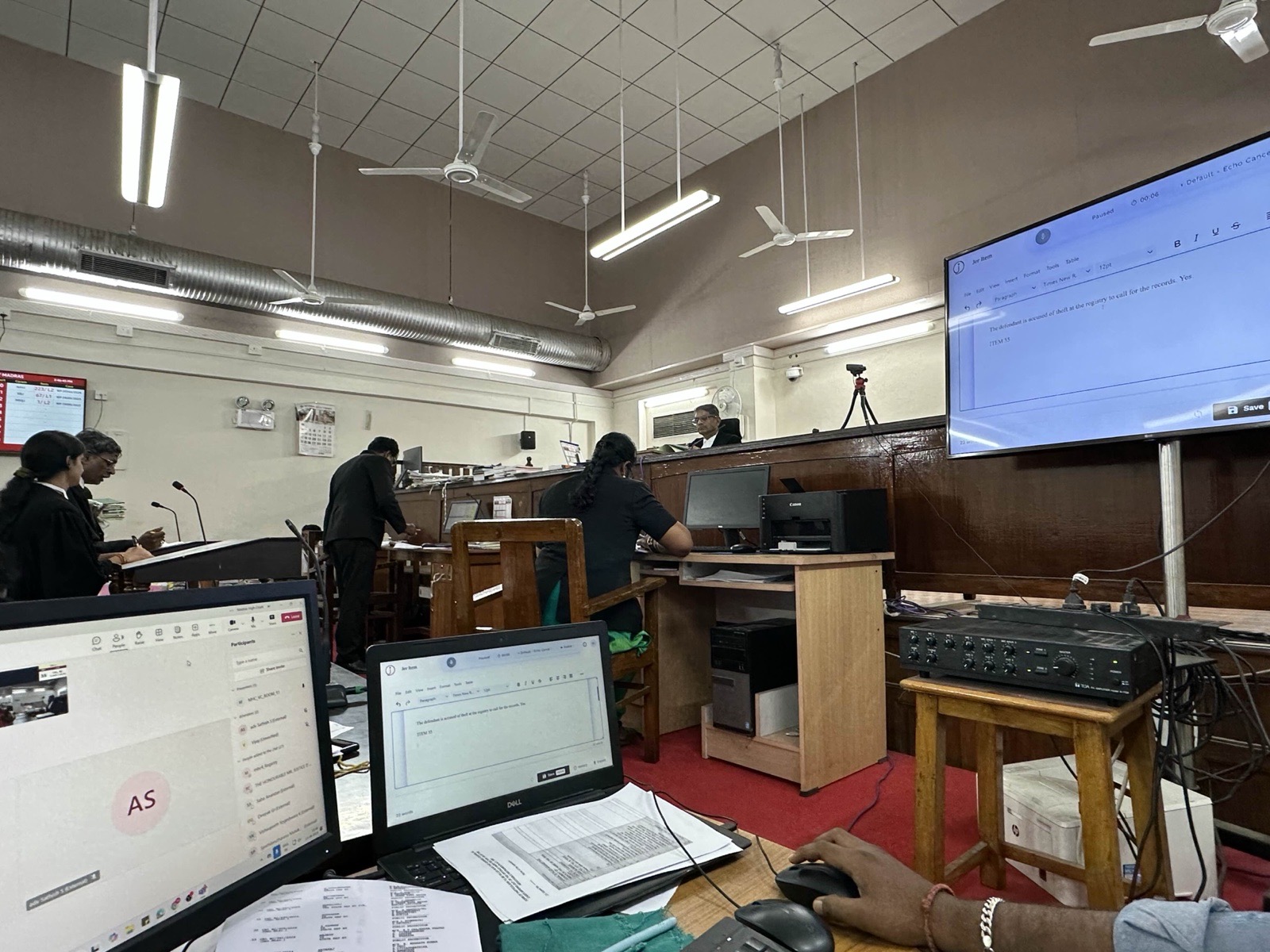
Every deployment started with fieldwork at the registry, before a line of software was written.
Extraction and scrutiny across Bengaluru, Dharwad, and Kalaburagi, with 11 paperless courthalls. In the reference run, officers decided 55/55 checklist items themselves.
“Every day I know exactly what the lawyer will argue before the case starts because of your AI.”Justice B. M. Shyam Prasad, High Court of Karnataka
A 10-person team spent 100 days on site, trained 350+ court staff, and co-designed 25 integrations with the court’s IT team. 3 benches went live in July 2026.
Automated defect checks for e-filings and headnotes for published judgments, evaluated by the court against manual scrutiny.
“The AI checks were superior in speed and consistency as compared to manual scrutiny.”Hon’ble Mr. Justice Senthilkumar Ramamoorthy, Computer Committee
We worked with the High Court and 4 district courts on how a file keeps its status, checks, and approvals once the paper is gone. On 1 May 2026, the Chief Justice of India declared Sikkim the country’s first paperless state judiciary.
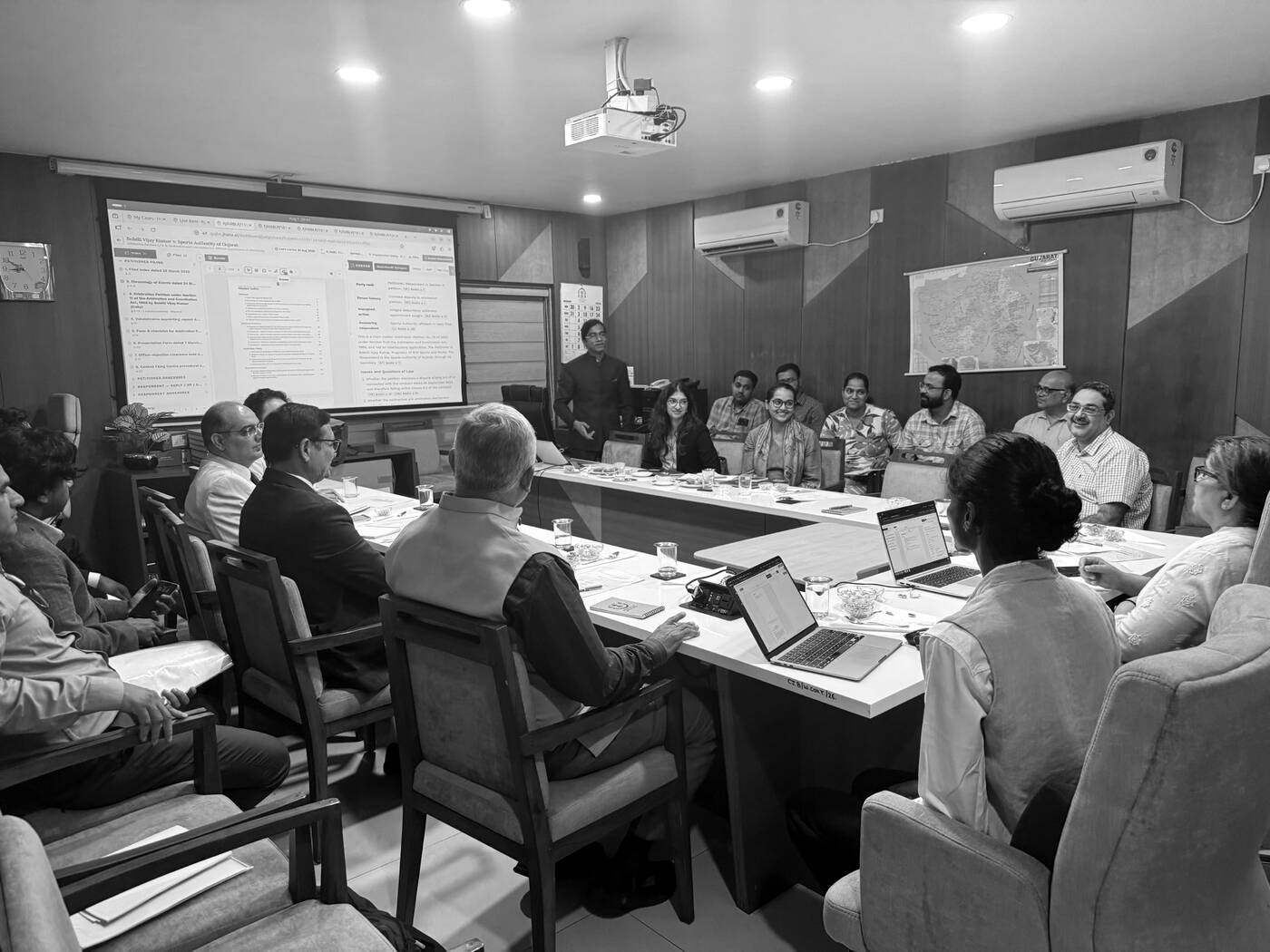
We start with fieldwork at the registry, not a software demo. Tell us which part of the court's work you want to change first.
Don't send confidential client material before we agree a channel and scope.